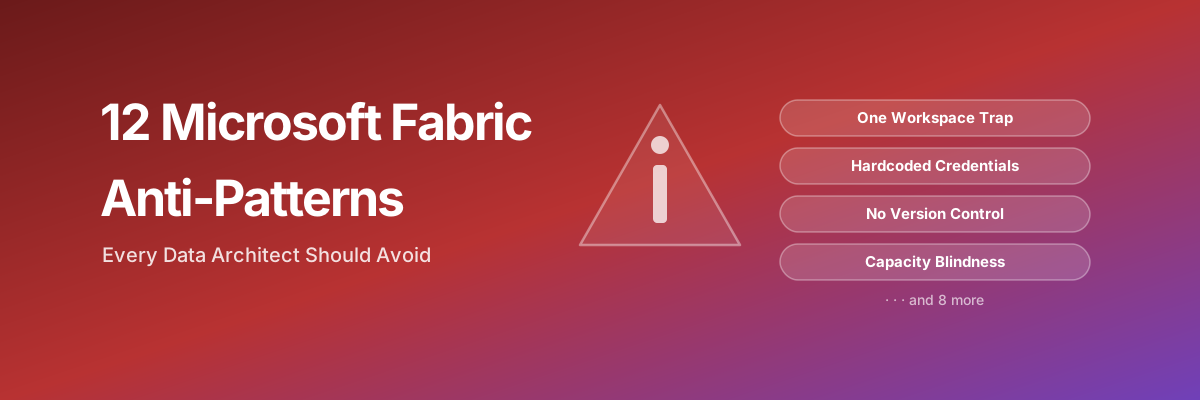
Across dozens of Microsoft Fabric implementations, the same twelve mistakes recur with remarkable consistency. They aren't obscure edge cases — they're the default outcomes when teams move fast without a structured Fabric practice. Each one is fixable, but they're easier and cheaper to avoid than to remediate.
Read the Full Article
This article summarizes the 12 anti-patterns we see most often. For complete remediation guidance and a deeper analysis of each pattern, read the full article on the XTIVIA Microsoft Solutions blog.
Read the Full ArticleThe 12 Microsoft Fabric Anti-Patterns
-
The One Workspace Trap — Everything deployed into a single default workspace, with no environment separation between development, test, and production. Governance and promotion workflows become nearly impossible.
-
Weak Naming Conventions — Lakehouse items, pipelines, and semantic models named arbitrarily (
Lakehouse_Final_v2, anyone?). Discoverability breaks down at scale and OneLake browsing becomes chaotic. -
No Version Control — Fabric items not connected to Git. There is no history, no rollback, and no code review process for data platform changes. Every edit is a production incident waiting to happen.
-
Capacity Blindness — Teams operating with no insight into F-SKU utilization patterns. Throttling surprises production workloads, and over-provisioning quietly inflates cost without any performance benefit.
-
Hardcoded Credentials — Connection strings and secrets embedded directly in notebooks and pipelines. A single departed engineer can expose the entire data platform.
-
Individual Account Access — Workspace permissions granted to personal accounts rather than Entra ID groups. Offboarding one person becomes a manual audit exercise across every workspace.
-
Unreviewed Tenant Settings — Default tenant configurations left exactly as Microsoft shipped them. Many defaults are permissive — data export, external sharing, and embedding all need explicit evaluation.
-
No Data Ownership — No defined domain owners or data stewards. Data quality issues have no clear resolution path; "who do I talk to about this?" has no answer.
-
Semantic Model Sprawl — Multiple Power BI semantic models serving the same subject area, each with slightly different metric definitions. User trust erodes when the same question yields different answers depending on which report they open.
-
Ad Hoc Ingestion — No standard ingestion framework. Every pipeline is a bespoke pattern, so observability, error handling, and reprocessing logic are inconsistent across the platform.
-
No Data Quality Strategy — Data lands in the Lakehouse with no validation layer. Downstream reports surface bad data with no mechanism to detect or quarantine it before it reaches users.
-
Reactive Monitoring — Alerts configured only after the first outage. There is no proactive capacity, pipeline health, or freshness monitoring to catch degradation before users notice.
Want the Full Remediation Guide?
The full article on XTIVIA's Microsoft Solutions blog covers each anti-pattern in depth, with concrete remediation steps and the prioritization framework we use during maturity engagements.
Read the Full Article on XTIVIA Microsoft SolutionsHow Many of These Apply to Your Environment?
In our experience, most organizations score against four to six of these patterns on their first maturity assessment. That's not a failure — it's the baseline. The pattern that matters is which gaps you fix first, and whether the same anti-patterns reappear six months later or get permanently designed out.
Several of these anti-patterns map directly to questions in our Fabric maturity assessment. If you're curious where your environment stands, the assessment is the fastest way to find out.
See how your Fabric environment scores against these patterns.
The XTIVIA Fabric Maturity Assessment evaluates your environment against architecture, governance, security, and DevOps best practices — including most of the anti-patterns above.
Take the Free AssessmentAbout the author

Vivek Agarwal
CTO, XTIVIA
Vivek leads digital transformation and technology modernization initiatives for XTIVIA customers as a trusted advisor. He has been working with Microsoft Fabric since its public preview — planning, architecting, and delivering green-field implementations, as well as assessing existing environments, developing remediation plans, and leading their execution. A seasoned problem-solver, his goal is to help customers solve their biggest challenges and achieve great outcomes. Connect on LinkedIn →